Standard Candles, Auspicious Stars

The Rubin Observatory, a Machine That Reads Distance, and the Century It Took the Light to Arrive
Prospero, marooned twelve years on an island with his books and his daughter, explains to Miranda why this one night matters more than any hour that came before it:
I find my zenith doth depend upon
A most auspicious star, whose influence
If now I court not, but omit, my fortunes
Will ever after droop. (The Tempest, 1.2)
A man stripped of his dukedom, his name, and his standing stakes his whole restoration on a window of favorable starlight. Shakespeare wrote the lines around 1611, a year or so after Galileo’s Starry Messenger went to press and the sky stopped being a painted ceiling, or dome surrounding the earth.
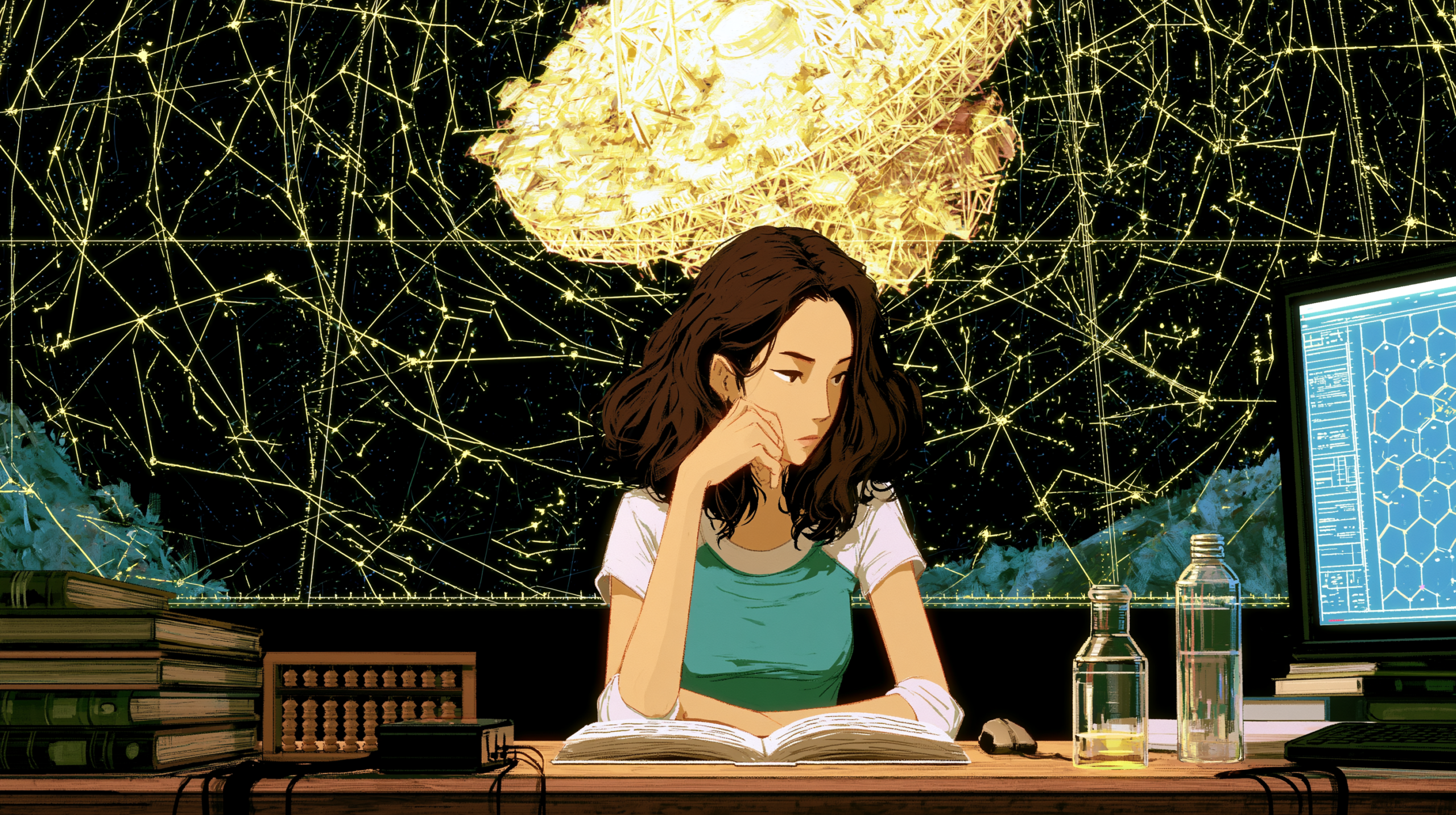
On the night of June 30, 2026, on a Chilean ridge called Cerro Pachón, the Vera C. Rubin Observatory opened its eye and began a survey it will not finish for a decade, photographing the entire southern sky every few nights until it has assembled the largest moving picture of the universe ever attempted. One day later, an international team announced the machine that will read what Rubin records. The method is called CIGaRS, and it does something astronomers have wanted since the first photographic plate came down from a telescope: it reads the distance to an exploding star from an image alone, no spectrograph required, modeling the supernova and its host galaxy as a single object and inferring, from light spread across a handful of filters, how far that light has traveled and how fast the space behind it is stretching (Karchev et al., 2026). Rubin will catch close to a million of these explosions. Ninety-nine of every hundred will arrive as images only, which is precisely the condition CIGaRS was built for (TechTimes, 2026). Early trials on simulated skies suggest it can tighten our grip on dark energy by a factor of four over pipelines that leaned on small spectroscopic subsets (Institute of Cosmos Sciences, 2026).
Every distance that machine will ever report is a sentence written in a grammar composed by women who were paid twenty-five to fifty cents an hour and whose names stayed off the academic reports of findings. The instrument on the mountain is new. The language it speaks is a century old, and it hides its age the way starlight does; you have to know what you are looking at to see how far it has come. Only now, in the naming of observatories and the minting of quarters and the publication of apologetic academic papers, is the light of that authorship finishing its trip to us. Recognition obeys something like a light-travel time. The work was luminous the moment it was done. The arrival took a hundred years.
The room where the sky was translated
Edward Pickering ran the Harvard College Observatory for forty-two years, and across that tenure he staffed it with women hired to process the flood that photography had loosed on astronomy. Glass plates came down from the telescopes by the thousands, each one a frozen field of stars, and someone had to read them: position, brightness, the fingerprint of a spectrum smeared into a band of light. The job title was computer. I used to spend two units on this when I taught computer science to high schoolers, mostly for the moment the room figured out the word predates the machine.
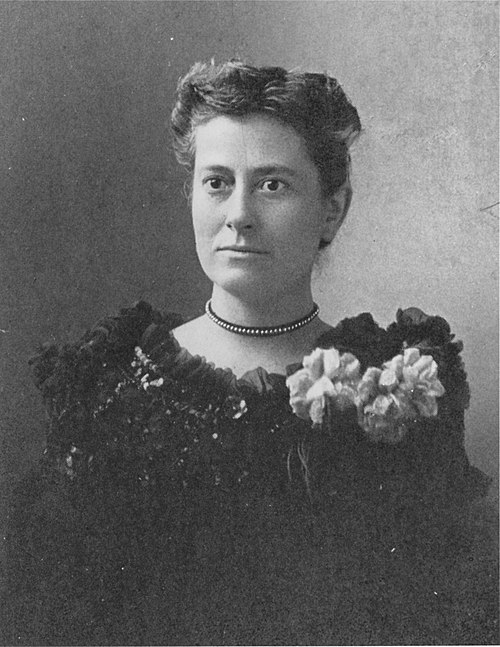
Williamina Fleming arrived as Pickering’s housemaid and left as the author of a stellar classification scheme, the discoverer of white dwarfs, and the first person to notice, on a plate of Orion, the dark notch we now call the Horsehead Nebula.
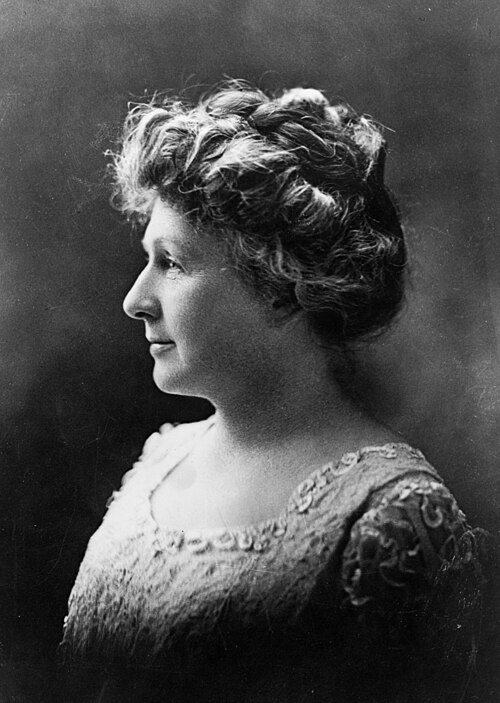
Annie Jump Cannon, working nearly deaf, sorted the spectra of some three hundred thousand stars into the sequence O, B, A, F, G, K, M that every working astronomer alive still uses.
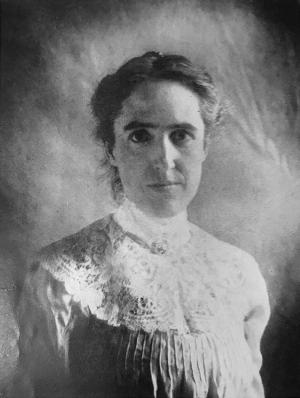
Henrietta Swan Leavitt, moving plate by plate through the Small Magellanic Cloud, noticed that a certain class of pulsing star kept a strict bargain: the slower the pulse, the brighter the star truly burned, in a relationship so exact that you could read a star’s real luminosity off its rhythm and, by comparing real brightness to apparent brightness, read its distance (Sobel, 2016).
Before Leavitt, astronomy had no trustworthy yardstick for anything beyond the near stars. Her period-luminosity law gave the discipline its first standard candle, a light whose true brightness is known, so that its dimness tells you how far away it burns. Edwin Hubble used her law to measure the distances to other galaxies and to discover that the universe is expanding. Every rung of the cosmic distance ladder above hers, including the Type Ia supernovae CIGaRS was built to read, is calibrated, directly or by inheritance, against the standard she set. The supernova is a standard candle because a woman made the candle standard, reading plates at a desk, for a pittance, while credit for the distances flowed upward to the directors who used her law to take the measure of the cosmos (Space.com, 2024).
Margaret Rossiter gave that upward flow its proper name in 1993, calling it the Matilda Effect after the suffragist Matilda Joslyn Gage, who had noticed a century earlier that the more a woman worked, the more the men around her profited and the less credit she kept (Rossiter, 1993). The mechanism runs on one move: reclassify a woman’s interpretive judgment as rote computation, so the judgment can be paid less and the authorship assigned to whoever directed it. Follow the word itself and you can watch the move happen at scale. At mid-century Langley, in segregated Virginia, a computer was still a person, mostly a woman, whose analysis went unseen and whose name stayed off the reports (National Air and Space Museum, 2017). Katherine Johnson computed the trajectories that carried the first American into orbit, and when John Glenn prepared to fly, he distrusted the electronic machine and asked for the human one in words that preserve, like an insect in amber, exactly how the labor was valued: get the girl to check the numbers (National Geographic Society, n.d.). The human computer verified the machine built to replace her. Then the machine took her job title, and she waited fifty years for a book to hand her name back (Shetterly, 2016).
Where uncredited work goes
Uncredited work does not evaporate. Credit can be diverted; the work itself goes where work goes, down into the foundations of whatever discipline it supports, where it stops being anyone’s achievement and starts being everyone’s ground. Cannon’s classification stopped being Cannon’s insight and became the alphabet in which stars are written. Leavitt’s law stopped being Leavitt’s discovery and became the meaning of the word distance for every object past the reach of parallax. Their judgment was metabolized, converted from authored insight into the working assumptions of an entire science, the way a language forgets its poets while keeping their coinages in every mouth. Nobody credits the inventor of the word lonely when they use it. Shakespeare probably wasn’t the one who minted it anyway.
Which brings the machine on the mountain back around. CIGaRS learns its trade inside a simulated universe whose rules encode what a Type Ia supernova is, what a host galaxy contributes to the light, and, underneath everything else, what a standard candle is worth (TechTimes, 2026). That ground truth is human. It is the compressed, calibrated, century-corrected judgment of the plate-readers and of the astronomers who standardized the candle. When the machine infers a distance from a smear of photons, it is executing Leavitt at the speed of electricity. The instrument carries her the way a cathedral carries its stonemasons, the ones who signed nothing and whose geometry still teaches the eye what upward means. The work outlived the withholding of the name. The work always does.
For once, the name is catching up while the work is still accelerating. The observatory was renamed for Vera Rubin in December 2019, the first United States national observatory named for a woman, honoring the astronomer whose galaxy rotation measurements gave us the first durable evidence that most of the universe is invisible, and who solved Palomar’s lack of a women’s bathroom by taping a paper skirt over the stick figure on the men’s-room door (Smithsonian American Women’s History Museum, 2025; Space.com, 2024). Her face is on a quarter now. Jocelyn Bell Burnell, whose pulsars went to her supervisor’s Nobel in 1974, received a three-million-dollar Breakthrough Prize in 2018 and gave all of it away to fund physics students from underrepresented groups, converting a corrected injustice directly into the next generation’s telescope time (Merali, 2018). The Harvard women have their celebrated history; the Langley women have their book and their film. None of this is restitution in the strict sense. The dead cannot spend a quarter. But the light of authorship, emitted a century ago, is finally arriving at the detector. We built better instruments for seeing the sky, and somewhere along the way we built slightly better instruments for seeing each other. The second improvement seems to have been way more difficult.
Bell Burnell herself declines the grievance reading of her own story. A Nobel to a research student, she has argued, would have demeaned the prize, and she takes a drier satisfaction in the fact that her pulsars finally convinced the physics establishment that astronomy contained serious physics (University of Cambridge, n.d.). A woman at the center of the canonical erasure refuses the erasure narrative. Take her seriously. She is pointing at the same thing the cathedral points at: the work itself, and the lasting beauty of it.
The auspicious star
Prospero’s fortunes hung on courting the influence of one auspicious star at its zenith, and the play’s whole plot-driving scaffolding (the storm, the reckoning, the restoration of names) unfolds inside that single window of favorable light. At the end he drowns his book, breaks his staff, and walks back into his dukedom as himself.
The women of the Harvard Observatory and the West Area computing pool never got to drown their books. Their books were taken up whole and dissolved into the sky’s grammar, uncredited, indispensable, burning at a luminosity the era around them could not measure. Now an observatory carrying a woman’s name turns its eye to the southern sky, and a machine built from their metabolized judgment reads a million dying stars, each one a standard candle because a woman standardized it, each measured distance a sentence in their language. The influence was always there. We are the ones arriving at the zenith, a century late, courting it at last.
Leavitt spent her working life reading distance out of dimness, which is another way of measuring how long a light has been traveling. It would not have escaped her, of all people, that the same arithmetic applies to a name across time and history.
References
Institute of Cosmos Sciences of the University of Barcelona. (2026, May 6). A new way to read the universe could sharpen understanding of cosmic expansion and dark energy. Phys.org. https://phys.org/news/2026-05-universe-sharpen-cosmic-expansion-dark.html
Karchev, K., Trotta, R., & Jiménez, R. (2026). CIGaRS I: Combined simulation-based inference from type Ia supernovae and host photometry. Nature Astronomy. https://doi.org/10.1038/s41550-026-02842-5
Merali, Z. (2018, September 6). Pulsar discoverer Jocelyn Bell Burnell wins $3-million Breakthrough Prize. Scientific American. https://www.scientificamerican.com/article/pulsar-discoverer-jocelyn-bell-burnell-wins-3-million-breakthrough-prize1/
National Air and Space Museum. (2017, January 26). Hidden figures and human computers. Smithsonian Institution. https://airandspace.si.edu/stories/editorial/hidden-figures-and-human-computers
National Geographic Society. (n.d.). NASA’s West Area Computers. https://education.nationalgeographic.org/resource/nasas-west-area-computers/
Rossiter, M. W. (1993). The Matthew Matilda effect in science. Social Studies of Science, 23(2), 325–341. https://doi.org/10.1177/030631293023002004
Shakespeare, W. (2015). The tempest (B. A. Mowat & P. Werstine, Eds.). Simon & Schuster. (Original work published 1611)
Shetterly, M. L. (2016). Hidden figures: The American dream and the untold story of the Black women mathematicians who helped win the space race. William Morrow.
Smithsonian American Women’s History Museum. (2025, June 5). New quarter honors Vera Rubin, astronomer who revealed the universe’s hidden mass. https://womenshistory.si.edu/blog/new-quarter-honors-vera-rubin-astronomer-who-revealed-universes-hidden-mass
Sobel, D. (2016). The glass universe: How the ladies of the Harvard Observatory took the measure of the stars. Viking.
Space.com. (2024, March 8). 20 trailblazing women in astronomy and astrophysics. https://www.space.com/trailblazing-women-in-astronomy-astrophysics
TechTimes. (2026, July 1). Supernova AI quadruples dark energy precision as Rubin Observatory goes live. https://www.techtimes.com/articles/319490/20260701/supernova-ai-quadruples-dark-energy-precision-rubin-observatory-goes-live.htm
University of Cambridge. (n.d.). Journeys of discovery: Jocelyn Bell Burnell and pulsars. https://www.cam.ac.uk/stories/journeysofdiscovery-pulsars
Leave a Reply