Domestication of the Invisible

In July 1952 a broke oil geologist named Charlie Steen drove a hundred miles back to Cisco, Utah, with a Jeep full of drill cores he believed were worthless. His bit had snapped off in the hole at 197 feet, the canary-yellow carnotite he was hunting had never appeared, and he had already decided to tell his wife they were out of the uranium business. He stopped first at a service station whose owner, Buddy Cowger, kept a “Lucky Strike” Geiger counter, as nearly everyone in the state seemed to by then. Steen passed the grey cores under it almost as a joke, and the needle ran to the edge of the dial. He had drilled into the top of what became the Mi Vida mine, which would yield something like a hundred million dollars in ore (Zoellner, 2000). What strikes me about the story now is less the fortune than the way it was validated. A radiation detector sat in a gas station beside the oil cans, operated by a man whose sons had brought him rocks to test that same afternoon. Steen himself did not own one.
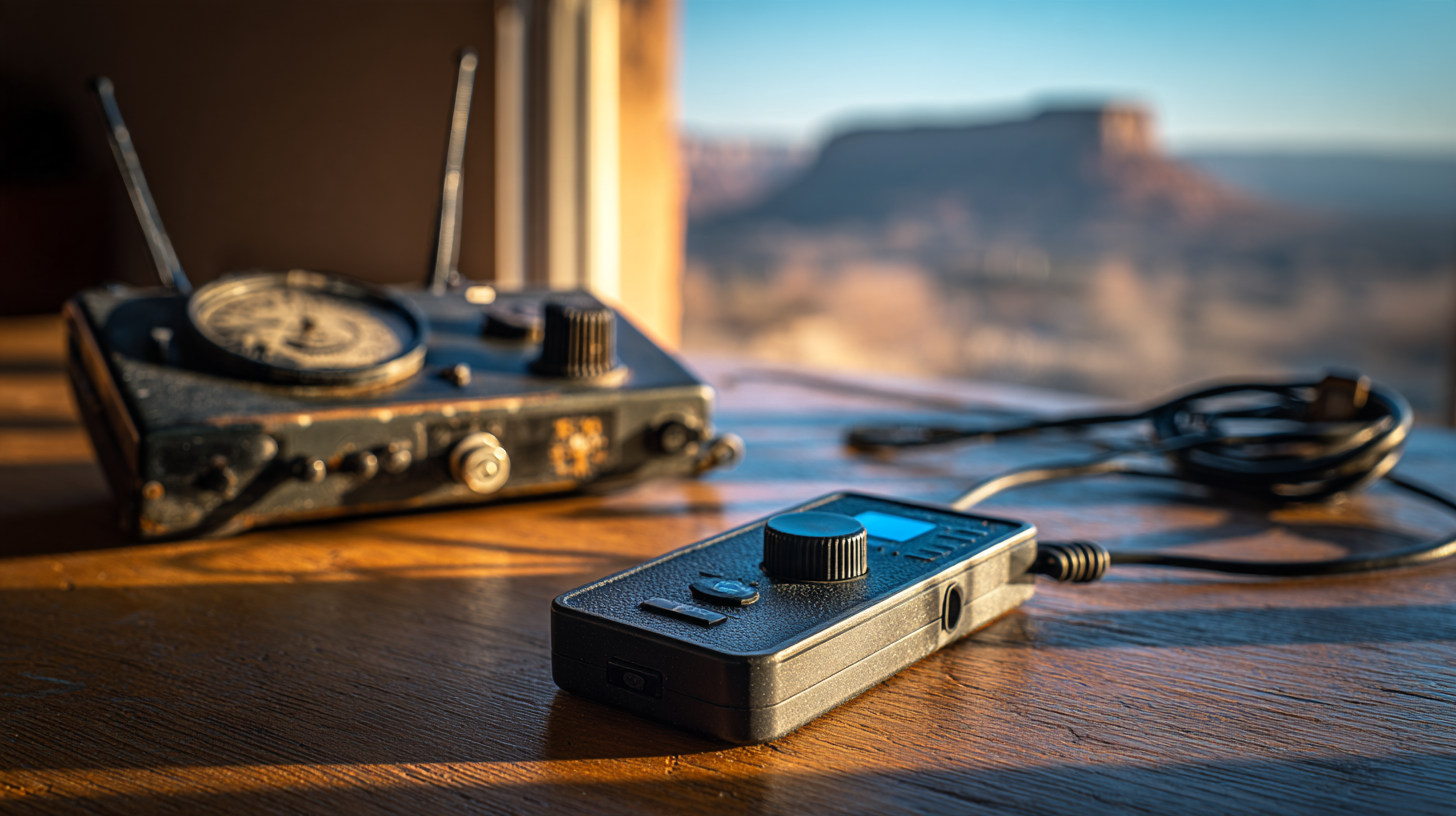
Seventy-four years later, a pair of detectors each about the size of a box of animal crackers rides in a carry-on bag on a commercial flight from Philadelphia to Madison, logging the rise and fall of particle counts as the aircraft climbs into thinner air and comes down again (Axani et al., 2025). The device is called CosmicWatch. Its components cost about a hundred dollars. It flashes each time a charged particle crosses a small slab of plastic scintillator, and it writes the event to a memory card with a timestamp, the temperature, and the barometric pressure beside it. Spencer Axani began building it in 2017 as an MIT graduate student who needed a small, low-power muon counter for the IceCube neutrino observatory in Antarctica; he soon saw that it could be made cheap enough for classrooms, and he now estimates that thousands have been built (Douwes, 2026). When the story recirculated through the science wires in mid-September, the detail that held me was its trajectory. A student project had become an instrument riding balloons to 100,000 feet and calibrating detectors at Los Alamos.
Citizen Science
The two scenes belong to one movement, and the $100 detector recapitulates a process first made visible in the uranium rush of the 1950s: the domestication of the invisible. At that time, instruments that registered radiation left the laboratory and entered kitchens, garages, drugstores, and service stations, and ordinary people become sensors for an aspect of physics they cannot usually perceive directly.
The uranium rush sent detectors outward from the state so that amateurs could locate a commodity the state would buy, and the costs, counted eventually in the lungs of miners, landed on the amateurs and the people they hired. CosmicWatch represents a new generation of detectors on exodus from the laboratory so that amateurs can measure a phenomenon nobody can own, or even harness currently, but the data returns as usable science. The amateur is repositioned from prospector at the margins of a national push to establish an institution to a modest supply line into it. This repositioning seems to me genuinely exciting, and I think a network of cheap, calibrated detectors in ordinary hands could turn up things no single well-funded group would have thought to look for.
The Case Against the Citizen
There is a serious body of opinion that would regard that excitement as naive, and it deserves a fair hearing before anything else. Bruno Strasser and his colleagues at Geneva have traced how “citizen science” became a fashionable label in the late twentieth century, and they treat its three standard promises (democratization, education, and discovery) as claims to be examined rather than assumed (Strasser et al., 2019). The economist and historian Philip Mirowski goes further. He argues that citizen science lowers the cost of research requiring routinized labor, channels unpaid work toward platforms that capitalize on it, and allows governments to shed credentialed scientific staff while calling the substitution participation. His sharpest point concerns training: if participants were serious, he writes, they would have to undergo real training, and at that point the enterprise would no longer be citizen science at all (Mirowski, 2017).
The empirical record lends these critics weight. In the largest quantitative study of online participation yet attempted, covering more than fourteen million accounts over two decades, Strasser’s group found that fewer than a million people contribute to online citizen science in a given month, that most projects outside nature observation are heavily male, and that most participants already have backgrounds in science or information technology (Strasser et al., 2023). The same paper recovers an editorial from Popular Science in 1902 declaring that “the era of the amateur scientist is passing.” Read together, these sources suggest that each generation rediscovers the amateur, dresses the rediscovery in democratic language, and leaves the underlying division of scientific labor untouched. If this is your governing point of view, the $100 detector is another toy, charming and pedagogically useful, with no bearing on how physics actually advances.
Rereading the Rush
Mirowski’s critique, it turns out, describes the uranium rush with uncomfortable precision. The Atomic Energy Commission launched what Utah’s state historians call the first federally sponsored mineral rush in history: it built roads into the back country, promised $10,000 bonuses for new lodes of high-grade ore, guaranteed minimum prices, and published geologic data gathered by federal survey instruments (Utah Department of Heritage and Arts, n.d.). In March 1951 it offered to pay more than double the prior price for high-grade ore and distributed guidebooks to anyone with the nerve to move to the Colorado Plateau (Zoellner, 2000). Geiger counters were sold at drugstores and sporting-goods shops in Moab. Milton Bradley put a square on The Game of Life that read “Discover uranium!”, and a board game called Uranium Rush came with a battery-powered toy counter that buzzed when a player struck ore.
The enthusiasm was manufactured by the state because the state needed labor and risk it did not wish to manage itself. At its peak, the industry employed some six thousand miners, many of them Mormon and Navajo, who breathed in uncountable tons of radon through the dust in their amateur excavations. A Public Health Service radiation expert, Duncan Holaday, warned in 1952 that mine air carried potentially deadly radon concentrations; the AEC’s internal response worried chiefly that the problem might become public and slow production. By 1966 an estimated ninety-seven uranium miners had died of lung cancer, and it took until 1990 for the Radiation Exposure Compensation Act to acknowledge a federal debt (Zoellner, 2000). The domestication of the invisible, in its first mass form, was a technique for converting civilian curiosity into extraction while exposing that distributed labor to an invisible ill, then trying to hide knowledge about it.
There is a quieter irony in the record as well. Steen found the richest deposit on the plateau by applying oil-field anticline theory and drilling straight down, while most prospectors swept cliff faces with hand-held counters. Inside the mines themselves, Geiger counters were of little use, because they clicked at everything (Zoellner, 2000). The consumer instrument was more emblem than epistemology. It made participants feel like scientists without making them into observers of anything beyond the needle.
CosmicWatch, as a contrasting device against this legacy, differs substantially, mechanically and operationally. There is no bounty; the muon cannot be staked, milled, or sold. The design files, firmware, and assembly instructions sit on a public repository, and building a unit means soldering surface-mount components, flashing firmware onto a micro controller, and understanding why a single detector cannot distinguish a cosmic-ray muon from a stray gamma ray from the concrete in the basement (Axani et al., 2025). The answer to that problem, which students learn by doing, is coincidence: two detectors joined by an ordinary network cable flag only those events that strike both within about 2.3 microseconds, so that a particle traveling downward through both slabs is separated from random local radioactivity. That is a real lesson in experimental reasoning, the logic of rejecting background particle noise. Mirowski’s objection about training assumes an instrument that asks nothing of its user. The CosmicWatch asks for the apprenticeship he says is missing, in compressed form. A physics professor at Cornell who has her introductory students build the detectors reported that some describe the experience as doing “real science” for the first time (Douwes, 2026).
The Screensaver Years
The second precedent is closer to living memory. In the spring of 1999, the University of California, Berkeley released SETI@home, a screensaver that borrowed idle processing time on home computers to sift radio telescope data for signs of an artificial signal. More than a million people (myself among them) signed up within six months, an influx no participatory science project has matched since (Strasser et al., 2023). I remember the screensaver’s shimmering spectral graph on office monitors after hours, a strange domestic icon: the search for other minds, running on beige towers under desks in insurance offices. SETI@home found no extraterrestrials, but it proved that a volunteer public could assemble computing power at a scale no single observatory budget could buy, and it built the software infrastructure other projects adopted. The underlying distributed network technology research later became important in the development of pre-bittorrent distributed sharing platforms, which, through a digital-Darwinian process became the .torrent standard we use today.
One of the unexpected rewards SETI@home delivered was what its authors called the first genuine astronomical discovery by a public volunteer computing project. In 2010 Einstein@Home, running on the same platform, identified a previously unknown radio pulsar, PSR J2007+2722, in data from the Arecibo Observatory. The computers that flagged it with the highest significance belonged to Chris and Helen Colvin of Ames, Iowa, and to Daniel Gebhardt at the University of Mainz (Knispel et al., 2010).
Along a similar line of distributed-computing advancement, a year after the pulsar discovery, the protein-folding game Foldit produced an astounding result. The crystal structure of a retroviral protease from the Mason-Pfizer monkey virus had resisted a decade of attempts using standard molecular replacement methods; Foldit players, most with no training in structural biology, produced models good enough for the structure to be solved within weeks, revealing surface features relevant to antiretroviral drug design (Khatib et al., 2011).
The mechanism in each case is significant, to my mind, because it answers the claim that amateurs merely supply grunt labor. Well-funded laboratories optimize along the paths their expertise makes visible. Distributed participants sample the space differently: more machines searching parameter ranges a single group would have pruned, more hands turning a molecule in directions a trained eye would have dismissed. The advantage lies in breadth rather than brilliance, and breadth is precisely what a cheap detector in many locations provides.
Nor is the pattern confined to the internet. During the same decade as the uranium rush, the Smithsonian’s Operation Moonwatch enlisted more than 700,000 participants to track satellites, and the Baby Tooth Survey collected over 300,000 children’s teeth to measure strontium-90 from atmospheric weapons testing (Strasser et al., 2023). The tooth project was a true citizen science moment. The outcome of participation turned a diffuse public anxiety about fallout into a dataset that had direct weight and influence on the politics which led to the eventual the test ban. Here, already in the 1950s, was the reverse current I am claiming for CosmicWatch: the public detecting the state’s invisible products rather than prospecting for them.
Shoes, Lungs, and the Price of Seeing
The strongest version of the opposing case, though, is historical rather than sociological, and it lives in shoe stores. From the mid-1920s into the 1950s, the shoe-fitting fluoroscope was a fixture of retail in North America and Europe. A child stood on a platform with her feet in an opening at the base of a polished cabinet, and she, her mother, and the salesman each peered through a viewing port at the green, ghostly bones inside the new shoes (Duffin & Hayter, 2000). By the early 1950s there were an estimated ten thousand of these machines operating in the United States. Measurements from the late 1940s put the dose to the feet at seven to fourteen roentgens for a twenty-second exposure, and surveys found more than sixty percent of inspected units exceeding the prevailing safety recommendation. Salespeople routinely put their hands into the beam to press the leather; one saleswoman developed radiation dermatitis after a decade of fittings, and a shoe model suffered a burn severe enough to require amputation of her leg. A late-1940s advertisement boasted that the machine had earned the Parents’ Magazine Seal of Commendation. Pennsylvania did not ban them until 1957 (Oak Ridge Associated Universities, n.d.).
Duffin and Hayter trace how public feeling toward the machines swung from enthusiasm and trust to suspicion and fear, in step with changing attitudes toward radiation itself (Duffin & Hayter, 2000). The lesson for any celebration of popular instruments is uncomfortable. Popularization tends to outrun understanding. The fluoroscope was sold as science, carried the aura of the laboratory, and was operated by people with no grasp of what the invisible was doing to their bodies. The uranium miner drinking water from a jar with a lump of ore in it, as some locals on the plateau did for their ailments (Zoellner, 2000), belongs to the same story. Wherever a culture has brought the invisible into the domestic sphere, it has tended to misjudge the terms. One needs to look no further than homeopathy, chiropractic, and the recent popularization of essential oils, if you need further examples of ill-informed mass adoption pseudo-scientific gullibility.
The distributed-computing precedent carries its own caution. SETI@home stopped distributing work on March 31, 2020, and the team gave two reasons: they had reached diminishing scientific returns, and managing the distributed processing had become a great deal of work that kept them from analyzing and publishing what they already had (SETI@home, 2020). The volunteers had produced more data than the institution could digest, and, true-to-form the participant bias stood tall. SETI@home’s participants were roughly ninety-two percent male, and among those who listed an occupation, more than sixty percent worked in science or IT (Strasser et al., 2023). The screensaver democratized access to a search, but largely among people already adjacent to its expertise.
Ask not what the Muon can do for You
These objections are real, and I think the specific anthropology of the CosmicWatch detector answers them better than my stated bias towards and general enthusiasm for citizen science ever could. Every technical system carries an implicit model of its user. The fluoroscope’s model was a spectator, as a technical aid to a salesperson. It made the invisible act upon the body in order to produce a picture, and it placed the customer’s child, the mother, and the salesman in the beam’s field so that each could see what was needed to close a sale. The Geiger counter of the uranium rush modeled its user as a prospector, someone whose seeing served a point to build an industry. CosmicWatch emits nothing, and consumes some electricity. Muons pass through walls, rock, and human tissue without harm, roughly one per square centimeter per minute at sea level, and the detector’s only act is to notice them (Axani et al., 2025). The user it presumes is an observer, someone who must learn to separate signal from background before anything counts. That shift from emitter to receiver removes the mechanism by which the earlier domestications did their damage.
It also changes what an amateur can plausibly discover. The published measurements are modest but telling. Two detectors flown on a high-altitude balloon to thirty-one kilometers recorded the count rate climbing to a broad maximum near twenty kilometers, the Regener-Pfotzer maximum first described in 1935, and then declining as the atmosphere thinned. Two detectors stacked three meters apart, read out by an oscilloscope, measured the muons’ velocity at close to the speed of light. A single unit logging barometric pressure alongside its counts can test how atmospheric weight modulates the muon flux, and its authors note it could watch for transient phenomena such as solar flares (Axani et al., 2025). Victor Hess needed a manned balloon and electroscopes to establish in 1912 that ionizing radiation came from above; a high school club can now repeat the essential observation with a weather balloon and a power bank.
To my mind, there are larger promises lying within the planted rows of this aggregated field. The detector’s designers describe a planned citizen-science network in which volunteers map Earth’s ionizing radiation and eventually reconstruct cosmic-ray air showers across distributed arrays (Axani et al., 2025). Axani imagines people around the world reporting muon rates from their own locations to a common site (Douwes, 2026). An extensive air shower from a very high-energy primary cosmic ray can spread secondary particles over kilometers of ground, and catching one requires detectors spread over kilometers of ground. Professional arrays do this at great expense in remote places. A network of cheap units in houses and schools, synchronized by internet time, would sample different geography, different altitudes, different days, with the breadth that made Einstein@Home and Foldit effective. The same penetrating particles have already been used to find an unknown corridor inside the Great Pyramid of Giza (Douwes, 2026). The instrument is already crossing back into institutional science: versions have flown on sounding rockets and to the International Space Station through NASA’s student flight program, and units calibrate the NuDot experiment at Delaware and a dark-matter detector at Los Alamos (Axani et al., 2025; Douwes, 2026).
What kinds of discovery could come from this? Probably small ones first: local anomalies in background radiation, unexpected correlations between weather and flux, better maps of how buildings and terrain shield particle showers. But the history of amateur science is full of small anomalies that became large. The Colvins in Iowa were not looking for a pulsar; their computer found one while they slept. A teenager with two coincidence-linked detectors in a basement in Montevideo or Nagoya, logging for months, could plausibly be the first to notice a pattern nobody had funded anyone to find. High schools in Japan and Argentina have already collaborated on cosmic-ray research using these devices (Axani et al., 2025).
Back to the Needle
I return to Buddy Cowger’s service station and its needle pinned against the edge of the dial. The critics are right about much of what that scene represents. Popular science has repeatedly been a vehicle for extracting labor and risk from people who were told they were participating in discovery; the uranium miners proved it with their lungs and the shoe-store salespeople with their hands. Strasser’s data show that the “citizen” in citizen science has too often been a credentialed man with spare processing power, and SETI@home’s hibernation shows that volunteer abundance can overwhelm the institutions meant to absorb it (Strasser et al., 2023; SETI@home, 2020). Any honest account of CosmicWatch has to carry those lessons forward: into who gets detectors, who gets taught to build them, and whether a future network gives its volunteers any say over what the data is used for.
Mirowski’s worry about untrained mimicry is undermined by a device that cannot be operated meaningfully without learning coincidence logic and background rejection. The worry about extraction meets an object with no market value and a phenomenon no one can own. The fluoroscope’s danger meets a detector that emits nothing and measures particles that already pass harmlessly through every body on the planet. The worry about institutional capacity is the one that remains open, and it is a design problem for the network, but neither of these pass verdict on the instrument itself.
What the comparison and historical analysis reveals is the thing ordinary coverage of the $100 detector misses. The invisible has been domesticated before, three times at least in living memory: as a commodity in the uranium rush, as a spectacle in the shoe store, and as idle computation in the screensaver. Each time, the household became a site of contact with forces beyond the senses, and each time the terms were set elsewhere. CosmicWatch domesticates the invisible as a calibrated sense, extended cheaply to anyone willing to solder, and in doing so it makes the amateur a contributor to physics rather than its prospector or its customer. Particles from exploding stars have been passing through kitchen tables for as long as there have been kitchens. What is new is that someone at the table can now count them, understand what the count means, and share those observations to a developing dataset all can learn from.
References
Axani, S. N., Sarfraz, M., Garcia, M., Owens, C., Frankiewicz, K., & Conrad, J. M. (2025). CosmicWatch: The desktop muon detector (v3X). Journal of Instrumentation, 20(10), P10040. https://doi.org/10.1088/1748-0221/20/10/P10040
Douwes, H. (2026, January 7). Making the invisible visible. UDaily. University of Delaware. https://www.udel.edu/udaily/2026/january/cosmicwatch-particle-detector-spencer-axani-cas/
Duffin, J., & Hayter, C. R. R. (2000). Baring the sole: The rise and fall of the shoe-fitting fluoroscope. Isis, 91(2), 260–282. https://doi.org/10.1086/384721
Khatib, F., DiMaio, F., Foldit Contenders Group, Foldit Void Crushers Group, Cooper, S., Kazmierczyk, M., Gilski, M., Krzywda, S., Zabranska, H., Pichova, I., Thompson, J., Popović, Z., Jaskolski, M., & Baker, D. (2011). Crystal structure of a monomeric retroviral protease solved by protein folding game players. Nature Structural & Molecular Biology, 18(10), 1175–1177. https://doi.org/10.1038/nsmb.2119
Knispel, B., Allen, B., Cordes, J. M., Deneva, J. S., Anderson, D., Aulbert, C., Bhat, N. D. R., Bock, O., Bogdanov, S., Brazier, A., Camilo, F., Champion, D. J., Chatterjee, S., Crawford, F., Demorest, P. B., Fehrmann, H., Freire, P. C. C., Gonzalez, M. E., Hammer, D., . . . Venkataraman, A. (2010). Pulsar discovery by global volunteer computing [Preprint]. arXiv. https://arxiv.org/abs/1008.2172
Mirowski, P. (2017, November 20). Against citizen science. Aeon. https://aeon.co/essays/is-grassroots-citizen-science-a-front-for-big-business
Oak Ridge Associated Universities. (n.d.). Shoe-fitting fluoroscope (ca. 1930-1940). Museum of Radiation and Radioactivity. Retrieved September 26, 2026, from https://www.orau.org/health-physics-museum/collection/shoe-fitting-fluoroscope/index.html
SETI@home. (2020, March 2). SETI@home hibernation [Online forum post]. University of California, Berkeley. https://setiathome.berkeley.edu/forum_thread.php?id=85267
Strasser, B. J., Baudry, J., Mahr, D., Sanchez, G., & Tancoigne, E. (2019). “Citizen science”? Rethinking science and public participation. Science & Technology Studies, 32(2), 52–76. https://doi.org/10.23987/sts.60425
Strasser, B. J., Tancoigne, E., Baudry, J., Piguet, S., Spiers, H., Luis-Fernandez Marquez, J., Kasparian, J., Grey, F., Anderson, D., & Lintott, C. (2023). Quantifying online citizen science: Dynamics and demographics of public participation in science. PLOS ONE, 18(11), e0293289. https://doi.org/10.1371/journal.pone.0293289
Utah Department of Heritage and Arts. (n.d.). Uranium mining in Utah. History to Go. Retrieved September 26, 2026, from https://historytogo.utah.gov/uranium-mining-utah
Zoellner, T. (2000). The uranium rush. Invention & Technology, 16(1). https://www.inventionandtech.com/content/uranium-rush-1
Leave a Reply